The only headshot with a rule about the background.
Two states wrote it down. One of them makes altering the picture a disciplinary question rather than a matter of taste.
What the rule actually says
Florida Rule 4-7.16(a) lists content that is presumed not to violate the lawyer advertising rules. Among the items on it: a photograph of the lawyers of the firm against a plain background consisting of a single solid color, or a plain unadorned set of law books. The same list names the inside or outside of a courthouse, columns, and diplomas.
Louisiana Rule 7.2(b)(1)(K) permits a photograph or image of the lawyers of the firm against a plain background, in almost the same words. Two regulators, writing separately, arriving at the same brief: your own face, and nothing behind it.
And then Louisiana Rule 7.2(c)(1)(I)(iii), which is the sharpest sentence in any US jurisdiction for this product. It prohibits a still picture, photograph or other static image that, due to alteration or the context of its use, is false, misleading or deceptive.
Not video. Not a dramatisation with actors, which the rules handle separately. An altered still photograph. In Louisiana, how much a headshot was edited is not a styling preference, and the operations this engine refuses are the operations that sentence describes.
This page states rules and does not advise. Read your own jurisdiction: the numbers above are there so you can.
Three setups, three items off the safe list
The briefs for this shoot were written before anybody here had read a bar rule, which makes the overlap worth pointing at rather than claiming credit for. A law office with shelves out of focus, a courthouse corridor, and a plain deep green wall. Those are three of the things the Florida list names, in order.
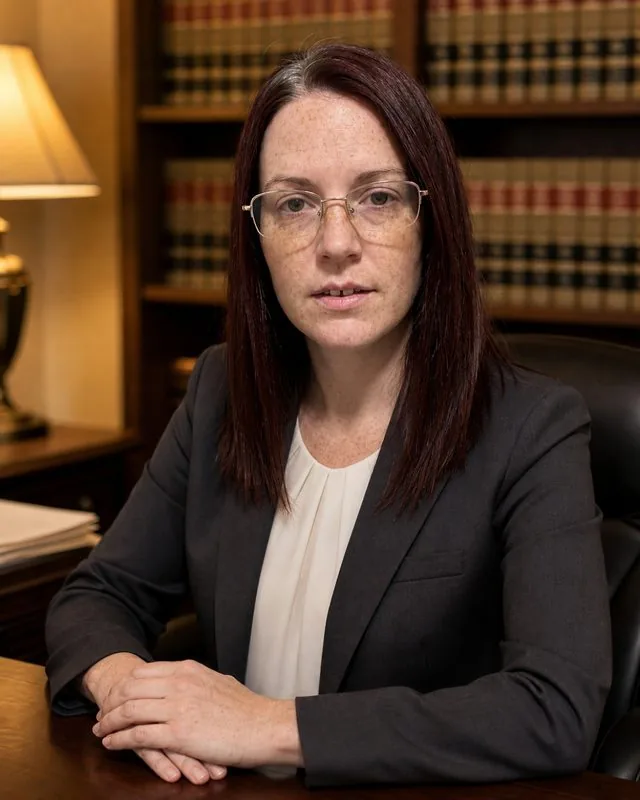
4-7.16(a): a plain unadorned set of law books
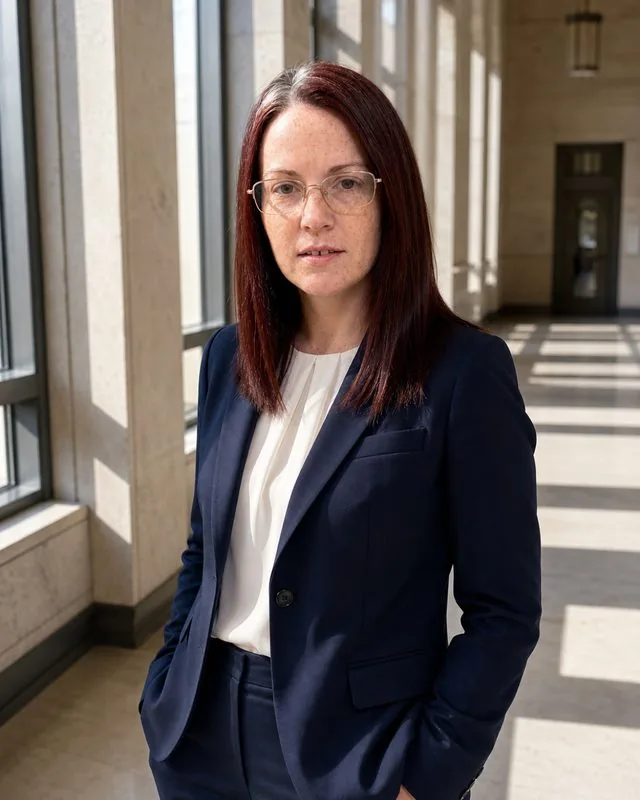
4-7.16(a): the inside or outside of a courthouse
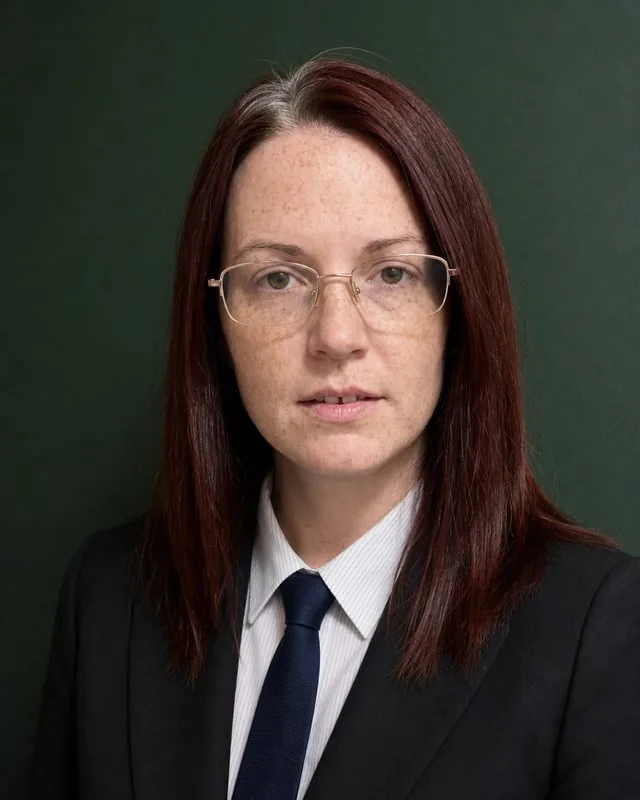
4-7.16(a): a single solid color
Where it goes, and what each place will not tell you
Read at source in August 2026. The first row is the interesting one: unlike every other profession on this site, the destinations that matter most here publish nothing at all.
- The legal directoriespublishes nothing
Martindale, Avvo, Super Lawyers, Chambers and Best Lawyers publish no dimensions, no file size and no aspect ratio in public. The specification appears only inside the logged-in profile editor. The practical consequence is that you cannot compose for the crop, so the frame has to start with room to lose on all four sides.
- A courthouse ID2 x 2 in, passport format
The Southern District of New York asks for a 2 by 2 photograph as a JPEG for the attorney service pass. New York State's Attorney Secure Pass wants two colour passport photographs on a white or light solid background, in person, for a fee, and its guidance says photos with coloured or cluttered backgrounds will not be accepted. This is not a crop of your bio photo.
- A boosted post in Florida$150 to change the picture
Websites are exempt from the filing requirement, but paid, boosted and sponsored social posts are not. Board of Governors policy says any change of any kind makes an advertisement a new advertisement with a new filing fee, and it enumerates photographs among the changes that count. Late filing costs more.
- LinkedInnot what makes it advertising
A New York City Bar formal opinion holds that a lawyer's LinkedIn profile is attorney advertising only if it meets all five of its criteria, including that its primary purpose is attracting clients for pecuniary gain. The photograph is not among the factors in that analysis. What tips a profile into regulated speech is the claims around the picture, not the picture.
Half of this profession does not choose its own portrait
At firms of any size the bio photograph is a firm asset, not a personal one. It is shot by a retained vendor to a locked specification, and what gets locked is the lighting direction, the shadow depth, the pose, the expression, the retouching approach and the exact tone of the background, so that a hundred partners across six offices line up on one page. An associate cannot substitute their own picture, and should not try.
Saying so costs us part of this audience, and leaving it out would cost somebody else an afternoon.
What is left is most of the profession and all of the surfaces that go stale fastest: a solo or small-firm site, the directory profiles nobody publishes a specification for, LinkedIn, a speaker or CLE biography due on Friday, and the worst gap of all, the weeks after a lateral move when the old firm's portrait is still sitting on the new firm's page.
Those are the photographs this is for. Four to ten ordinary pictures of yourself, three briefed setups, and no scheduling a photographer around a docket.
What the rules do not say
No bar has named this
A fifty-state review of bar rules on AI in advertising found no state with an explicit rule about generated imagery, and reading the Florida, New York, Texas, Louisiana and California materials directly did not turn one up. Anybody telling you a bar has banned AI headshots is describing a rule that has not been written yet.
The rules that apply are about people
Florida prohibits an image creating the erroneous impression that the person shown is a lawyer of the firm, unless a specific disclaimer appears. New York forbids using actors to portray the lawyer without disclosure. Texas refuses to treat a disclaimer as an automatic cure. All three are about a stand-in standing in for you.
Which is the easy test to pass
A photograph of you, generated from photographs of you, under a rule that keeps your jaw, your lines and your asymmetry, is not a stand-in. The failure mode those rules describe is a stranger presented as you, and it is the exact failure this engine is built to refuse.
Asked by lawyers
Is there really a rule about the background of a lawyer photograph?
In two states, yes, and both are permissive rather than prohibitive. Florida Rule 4-7.16(a) lists content presumed not to violate the advertising rules, and that list includes a photograph of the lawyer against a plain background of a single solid colour or a plain unadorned set of law books. Louisiana Rule 7.2(b)(1)(K) permits a photograph of the lawyer against a plain background in almost the same words. Two regulators, arriving independently at the same brief: your own face, nothing behind it.
Are the law books and the courthouse columns a cliché to avoid?
They are mocked constantly and they are also the regulator's own safe harbour. The same Florida list names an unadorned set of law books, the inside or outside of a courthouse, columns and diplomas as presumptively valid content. You are free to find them dated. You should know that the rule does not.
Has any state bar banned AI-generated headshots?
None found. A fifty-state review of bar rules on AI in advertising turned up no state with an explicit rule about generated imagery, and searching the Florida, New York, Texas, Louisiana and California materials directly did not produce one either. What exists instead is general rules that land on the question anyway, and one of them is unusually specific: see the next answer.
Which rule comes closest to reaching an edited photograph?
Louisiana Rule 7.2(c)(1)(I)(iii), which prohibits a still picture, photograph or other static image that, due to alteration or the context of its use, is false, misleading or deceptive. It is black-letter law aimed at altered still photographs, not at video and not at dramatisations. A portrait that slims, de-ages or restyles a Louisiana lawyer is inside its language. One that changes the light, the framing and the jacket is not obviously inside it. No disciplinary decision applying that subsection to a headshot was found, so how far it reaches is untested.
Can I keep using the portrait my old firm paid for?
That is a question about identity rather than about copyright. Florida Rule 4-7.13(b)(5) prohibits an image that creates the erroneous impression about who is shown or who they work for, absent a specific disclaimer the Bar words for you. A portrait shot to another firm's locked specification, still sitting on your new firm's page, is the most common version of that problem in practice, and it is the moment most laterals discover they need a photograph of their own.
A plain background is the safe harbour. It is also the easy part.
8 photos free. Run the shoot, put a frame next to the portrait on your bio page, and decide which one a client would recognise across a table.
Get 8 free photos