The one photograph judged next to thirty others.
Every other headshot is looked at alone. This one lives in a grid, and the grid is what people notice.
Find the odd one out at 48 pixels
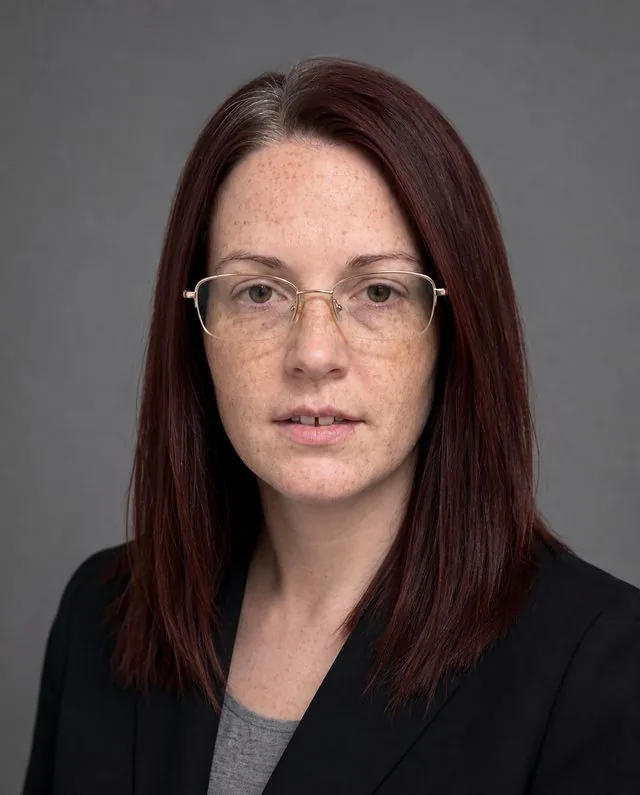
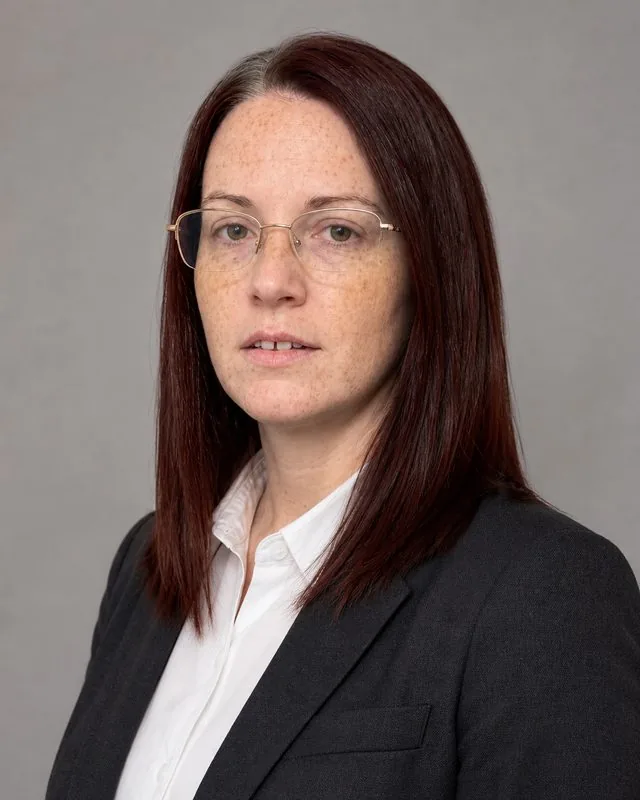
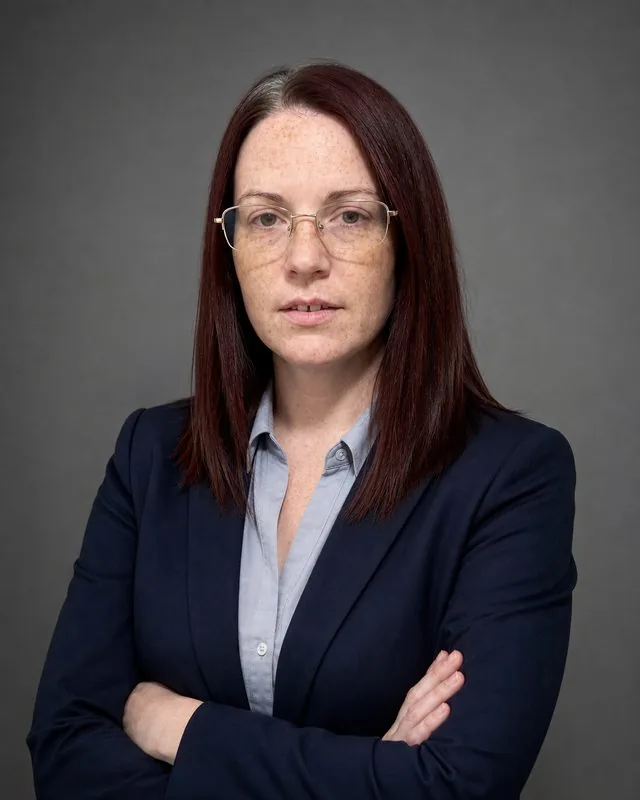
Microsoft 365 renders profile photos off a fixed ladder of nine sizes, and the bottom rung is 48 pixels square. That is the version a colleague sees in a member list, a meeting invitation and a message header, which over a working week is almost every time they see it at all. Below are four photographs of the same person at that size. Three came from one shoot and one did not.
- corporate, setup 1
- corporate, setup 2
- corporate, setup 3
- office candid, setup 1
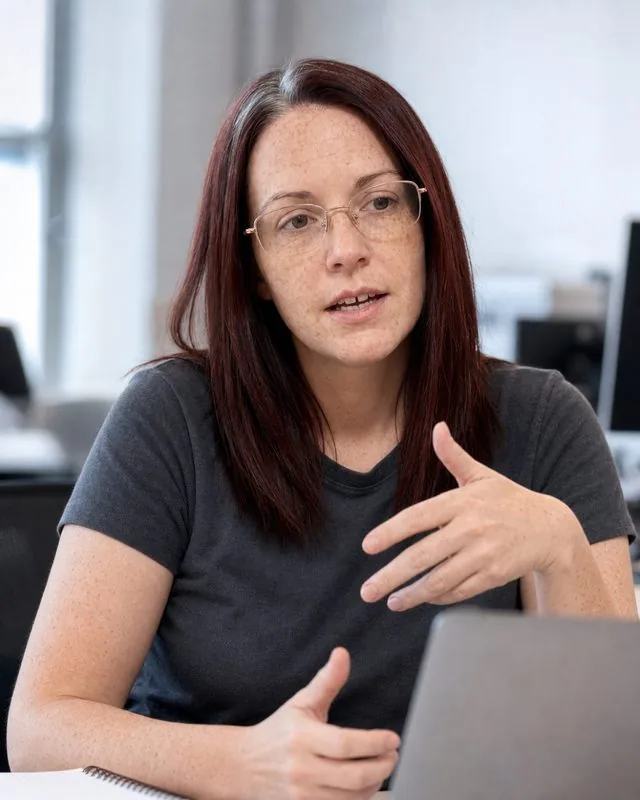
Nothing is wrong with the fourth photograph. It is a good picture and on a personal profile it would be the better one. In a directory it is the defect, because at 48 pixels the lighting subtleties everybody argues about are invisible and exactly two things survive: the hue behind the head, and how much of the frame the head fills. Which is the whole discipline. Pick one shoot and let everybody run it.
What each surface asks for
Read at source in August 2026. The last row is the one worth sitting with.
- Microsoft 36548 to 648 px, square
Profile photos come off a fixed ladder of nine sizes, from 48 to 648 on a side, and the Graph API exposes each one separately. What a colleague sees in Teams and Outlook all day is the bottom rung. Photos stored in the directory itself can be any dimension; the ladder is what gets rendered.
- Slack512 x 512 px minimum, 1024 maximum
Its own help page states both ends, and it is a rare upload form with a ceiling low enough to bite. Note that Slack and Microsoft both want a square while a company team page is usually 4:5 or 3:4, so one master file has to survive three crops.
- A written company standard400 x 500 px, eye line at one third
A real published example, in full: 400 by 500, JPG, colour preferred, facing the camera, and the photo relatively centred with the eye level at or around the one third line from the top. That last number is the useful one. Eye position, not framing, is the variable that makes a grid line up.
- Anything at allpublishes nothing
There is no dimensional standard for a business headshot. The only face photograph with a published geometry is the passport: the United Kingdom asks for the crown of the head to the chin to be between 29 and 34 millimetres inside a 45 millimetre frame, which is a head occupying 64 to 76 per cent of the height. Because no equivalent exists here, every company has to author one, and head height as a fraction of the frame is the measurable that does the work.
The one thing editing cannot put right
Ask a distributed team to send their own photographs and you will get a set that cannot be rescued afterwards. Not because of the backgrounds, which can be replaced, or the colour, which can be graded. Because of the geometry. A face photographed at about twelve inches shows a nasal base roughly thirty per cent wider than the same face at five feet, measured and published. Half the team at arm's length and half standing back gives you faces that are different shapes.
A photographer solves this by keeping six things on file to match a joiner later: the light source, the angle of that light, the background, the lens, the crop and the delivery. Lens is on that list, and it is the one an instruction cannot control.
Here those six are not notes in somebody's file. They are a written brief with an address in a catalogue, and it does not drift between March and the following March. Everybody runs the same shoot and the room is the same room. That is the only claim on this page that is really about the product rather than about the problem, and it is the one that matters for a set.
What comes back is 1152 by 1440 a photograph, which is past the top rung of the Microsoft ladder on the short edge and leaves room to crop square for the chat tools and taller for the team page.
The expensive person is number forty-one
The price falls with the crowd
One published 2026 rate card: 200 to 300 dollars a head for five to ten people, dropping to 100 to 150 above fifty. Half a day is 1,500 to 3,500, a full day 3,000 to 6,000, travel and setup 150 to 500 on top. The economics are entirely about filling a room.
Which is why the joiner costs the most
The same photographer who worked out at a hundred and ten a head on the day charges a minimum plus a travel surcharge to come back for one person in November. So the new hire either waits for a quorum or goes on the page in a photograph that does not match, and both of those are the normal outcome.
And the day decays from the day it happens
US separations have been running at about 3.3 per cent of employment a month. Over a year that is turnover on the order of a third of a company, so the hundred people photographed in March are meaningfully not the hundred on the page next March. The thing to buy is not the shoot. It is the process for person forty-one.
None of which says a photographer is the wrong answer. A good one in a room with your team gets something a brief cannot, and if you can fill the room and keep filling it, fill it. This is for the other case, which is most companies: people in six cities, a page that is already out of date, and one person starting on Monday.
What your legal team will ask
Three questions, and we would rather give you the article numbers than an opinion. This is not legal advice and the answers below are not settled law.
Does the AI Act make us disclose it
Article 50 of the EU AI Act has applied since 2 August 2026. It requires the deployer of a system generating image content that resembles real people to disclose that the content is artificially generated, clearly and at first exposure. Whether a company page of generated portraits of its own employees falls inside it is unresolved, and we found no regulator decision either way. Read it, and if in doubt say so on the page.
Is a staff photograph biometric data
GDPR Recital 51 says photographs are not systematically special category data, and become biometric data only when processed through a specific technical means allowing unique identification. Whether building a likeness from an employee's face is such a means is genuinely unsettled. Separately, consent given for a photo day does not cover feeding those pictures to a generator: it is a new purpose.
What happens when somebody leaves
A website photograph is cheap to take down, so on the usual balancing the departing employee's interest wins and it comes off. Printed material already distributed is treated differently. The practical consequence is that a team page needs an offboarding step as well as an onboarding one, which is another reason this wants to be a process rather than an event.
There is one place where the written corporate standards are already on our side. They forbid, in their own words, skin smoothing beyond the point where the employee is still recognisable, and face-altering effects of any kind. That is a policy document arguing for the thing this engine refuses to do, and uneven retouching is far more visible in a grid than in a portrait: one over-smoothed face among thirty normal ones is the tell.
One shoot, three setups, one person
Three frames of one brief, which is what everybody in the company would be running. The backgrounds sit in the same narrow band of grey and the head fills roughly the same share of each frame, which is why they hold together at the size the directory renders them. If what you want is the one photograph for a professional network rather than a set for a company page, the LinkedIn page is about that instead.
Asked by the person who owns the page
Why does our team page look wrong when every photo is fine?
Because the unit being judged is the variance between them, not the quality of any one. Put thirty portraits in a grid and the eye finds the exceptions instantly: a different background hue, a head noticeably larger or smaller in its frame, one face smoothed more than the others. A photograph that would be excellent on a personal profile can be the defect on a company page, and nothing about looking at it alone will tell you that.
Can we not just ask everyone to send a photo?
You can, and the geometry will give you away. A face photographed at about twelve inches shows a nasal base roughly thirty per cent wider than the same face at five feet, which is the measured reason a selfie does not look like the person. Colour and background can be matched in editing afterwards. That distortion cannot: half a team at arm's length and half standing back gives you faces that are literally different shapes, and the eye reads it as a different photographer.
How do we photograph somebody who joins next year?
This is the actual problem, and it is the one a photo day does not solve. A photographer keeps six variables on file to match a later joiner: the light source, the angle of that light, the background, the lens, the crop and the delivery. Here those are a row in a catalogue rather than notes in somebody's file, so the person who starts in fourteen months runs the same shoot and lands in the same room. The brief is the specification.
What does a photo day cost?
One published 2026 rate card, tiered by headcount: 200 to 300 dollars a head for five to ten people, 150 to 225 for eleven to twenty-five, 125 to 175 for twenty-six to fifty, and 100 to 150 above fifty. Half a day runs 1,500 to 3,500 and a full day 3,000 to 6,000, with 150 to 500 for travel and setup. The interesting number is not on the invoice: the per-person price falls with headcount, so the marginal new hire is the most expensive person in the company to photograph.
Are there rules about using AI-generated photos of staff?
One that a European company should read for itself. The EU AI Act transparency obligations in Article 50 have applied since 2 August 2026, and they require the deployer of a system that generates image content resembling real people to disclose that the content is artificially generated. Whether a company page of generated portraits of its own real employees falls inside that is not settled and we found no regulator decision either way. We would rather hand you the article number than an opinion. Separately, plenty of written corporate headshot standards already forbid what most tools in this category do: one says skin smoothing must be subtle enough that the employee is still recognisable, another that there must be no face-altering effects.
Try it on one person before you propose it for everybody.
The first 8 cost nothing. Run the shoot on yourself, shrink the result to 48 pixels beside the rest of your team page, and see whether it belongs there.
Get 8 free photos