The only headshot somebody checks against your face.
Casting sees the photograph, then sees you, usually within the week.
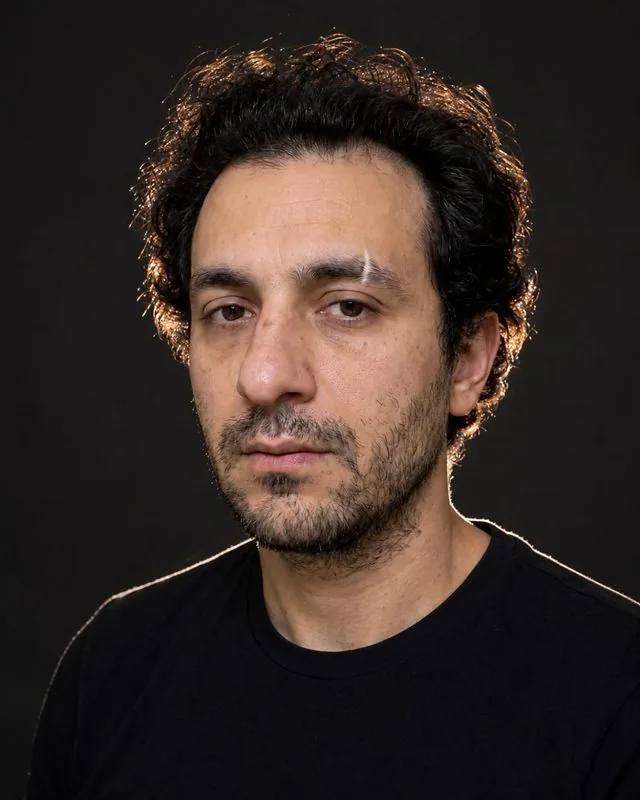
Two photographs, because the form makes you choose
Actors Access will not save a photo until you have filed it as Commercial, Theatrical or Other. Two slots are free and you can swap those as often as you like; a third is ten dollars, and a paid photo cannot be swapped afterwards, only removed and bought again. So the free tier is exactly one commercial look and one theatrical look, and the real constraint on an actor is not finding one good photograph. It is that the platform has already decided you need two different ones.
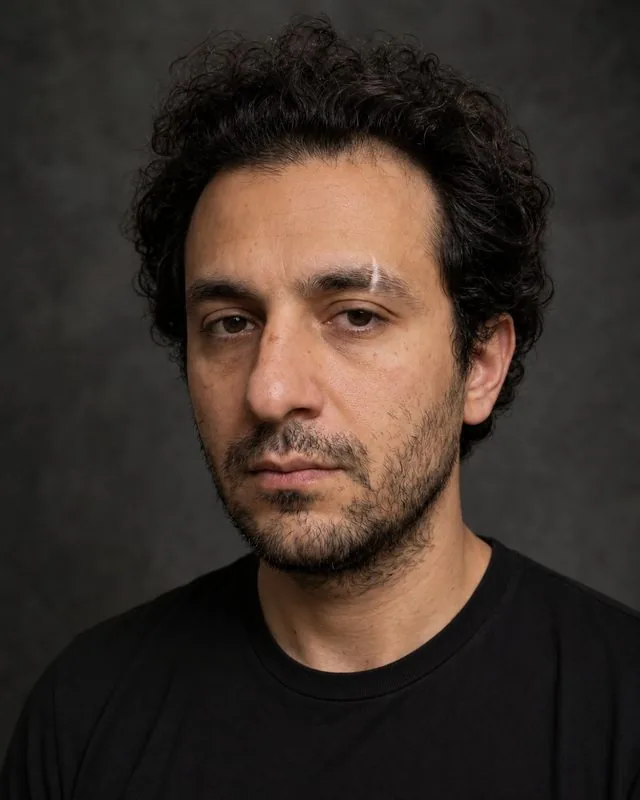
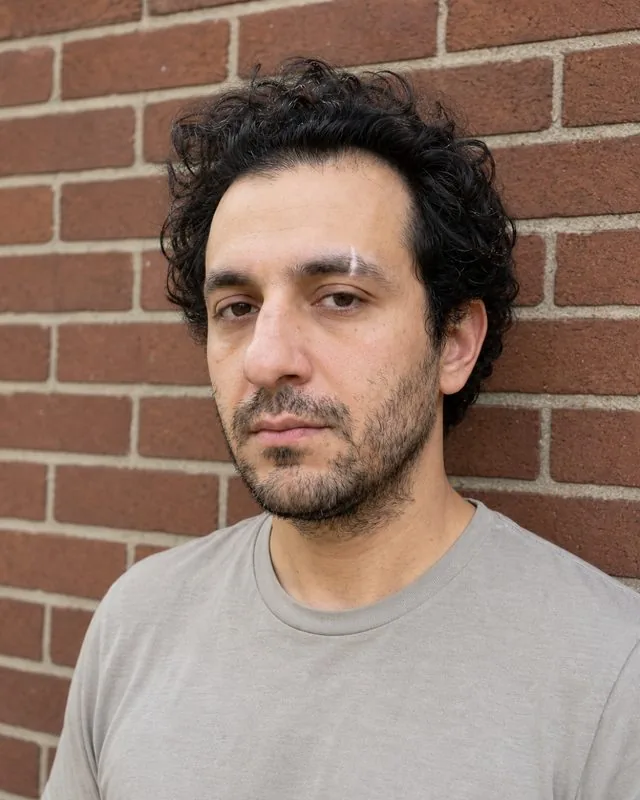
This shoot is briefed theatrical, and two of the three frames are lit that way. The middle one is daylight in open shade, which is the closest thing in it to a commercial look and is still not a commercial look: nobody is smiling. If what you need is the bright, open, smile-forward register, the LinkedIn shoot is briefed for it and costs the same, and running both is how you fill the two slots the platform gives you.
Nobody agrees what shape it is
The printed 8 by 10 everyone calls the industry standard is a 4:5 frame. Actors Access asks for 500 by 700, which is 5:7. Casting Networks will take anything above 360 by 360, which is a square. Three destinations, three ratios, and one file that has to be cut three ways before it fits any of them.
- 4 : 5 · printed 8 x 10
- 5 : 7 · actors access
- 1 : 1 · casting networks
What each place asks for
These are the numbers the platforms publish about themselves, not advice about them. Read at source in August 2026, and they move, so check yours before you upload.
- Actors Access500 x 700 px
The platform states that as the optimal size, which is a 5:7 frame and not the 4:5 of a printed 8 by 10. Every photo you upload also has to be filed as Commercial, Theatrical or Other before it will save.
- Casting Networks360 x 360 px minimum, 30 MB maximum
A square minimum, so a third shape again. It takes jpg, jpe, jpeg, png and gif.
- Spotlight500 x 500 px minimum, 1 MB to 40 MB
That 1 MB is a floor and not a ceiling, which is the opposite of every other upload form you have ever used. A tidy export at the right pixel size still gets refused for being too small a file.
- A printed 8 x 102400 x 3000 px at 300 ppi
Still handed across a table at in-person calls, and the only destination here measured in inches rather than pixels. It is also the one this product does not reach; the next section says by how much.
Sources: Actors Access, Casting Networks, Spotlight.
Where this stops: the print
1152 x 1440
what a 4:5 shoot hands you, per photograph
That is comfortably past every screen destination on this page. Cut to 5:7 for Actors Access it is still 1029 by 1440; cut square for Casting Networks it is 1152 on a side. It is not enough for a print. At eight by ten inches it works out at 144 pixels to the inch, against the 300 a photographic lab prints at, and the difference is visible in the hand at the distance somebody holds a headshot.
There is no upscale in this product. The engine can do one and nothing calls it, because until now the answer to what a photograph is for has been a profile, and a profile renders it at four hundred pixels. For everything you upload, this is more file than the place will keep. For the one you hand across a table, take the file to a lab and ask.
The failure is looking better than you do
Ask casting directors what makes them put a headshot down and they describe one thing in different words: the person in the room is not the person in the picture. Too young, too smooth, too thin, too beautiful, or simply two years out of date. The photograph is not being judged as a portrait. It is being treated as a claim about what will walk in, and the claim gets tested almost immediately.
Which is why the objection to generated headshots, when it is made by somebody who casts for a living, is about verification rather than ethics. Alpha Tyler, who cast for Tyler Perry Studios, put it in April 2026 as "casting directors will still see the actor in person". That is not an argument against a photograph made this way. It is an argument against a photograph that flatters, whoever made it.
Every scene here runs under one fixed rule: the face in the output has to be unmistakably the face in your own pictures. Hair texture, jaw, the asymmetry, the scar through the eyebrow, the lines at the eyes. The engine will change the light, the wall behind you and the shirt. It will not make you somebody else, and on this page that is not a limitation.
What the rules say, and what they do not
The platforms have not written one
Spotlight terms and conditions contain no clause about AI, generated images or photo manipulation. What they do contain is a right to refuse any photograph it considers unsuitable, which is a discretion rather than a rule. The US platforms publish technical requirements and general guidance against filters and heavy editing, and nothing about how the picture was made.
The casting guidelines are about casting
The International Casting Directors Association published AI guidelines for casting platforms in May 2026, endorsed by Spotlight and by casting guilds in eleven countries. They govern transparency, consent and data protection in how the casting process uses AI. They are not a rule about the photograph on your profile, and a page telling you otherwise has not read them.
The union contract is about productions
The SAG-AFTRA TV and Theatrical agreement ratified in June 2026 covers digital replicas and synthetics created in connection with employment on a production: consent, notice, payment. Your own marketing photography is not employment on a production, and it is not what those terms reach.
And one thing we cannot solve for you. Spotlight asks for the photographer name when you upload, chosen from a list or typed in as a new one, and there is no honest answer to that field for a photograph you generated. No US platform in this list has an equivalent. We would rather you learned that here than at the upload form.
Asked by actors
What is the difference between a theatrical and a commercial headshot?
Expression and light more than clothes. Commercial is brighter, flatter, smile forward and warmer in wardrobe; theatrical is grounded, more contoured, muted, often with no teeth showing. It is not a matter of taste either: Actors Access asks you to file every photo as Commercial, Theatrical or Other, so the platform assumes at least two deliberately different photographs of one face.
Why is an actor headshot 8 by 10?
Because of photographic paper, not because of casting. Eight by ten was the size the paper industry made most of, so it became what actors printed and what casting filed, and the 8.5 by 11 resume got trimmed down to match rather than the other way round. It survives as the size of the print you hand over in person.
Does the union require a headshot?
Not in writing. Actors Equity publishes its Principal Audition Procedures for New York, Chicago and Los Angeles, and the document does not mention a headshot, a photograph or a resume anywhere in it. The stapled 8 by 10 is universal custom enforced by individual audition notices, which is a different thing from a rule, and it is checkable in about two minutes.
Is it all right to submit an AI headshot?
No casting platform we could find has published a rule about it either way, and we would rather say that plainly than claim permission nobody has given. What is true is that the enforcement is a person: a casting director sees the photograph and then sees you, and every one of them on record describes the same failure, which is a photograph that flatters. That is the one thing this engine is built not to do. It is also worth knowing that Spotlight asks for the photographer name when you upload, and we have no answer for that field.
How often does a headshot need replacing?
Every twelve to twenty-four months for an adult, roughly every six months for a child actor, and immediately after anything that changes how you look: hair, glasses, facial hair, a significant change in weight. The clock is not about fashion. It is about the photograph still matching the person who arrives.
3 setups. Run it on your own face first.
8 photos free, which covers this shoot and one more. Put the result next to the last headshot you paid for and decide which one you would rather be checked against.
Get 8 free photos